ES
 DE
 FR
 IT



🚛 Rising fuel costs and truckers’ protests have once again highlighted how essential the movement of goods is to the Italian economy.
The blockades and slowdowns of recent weeks, especially in some regions of southern Italy, have disrupted the distribution of fuel, food and other goods. But the consequences are not limited to supermarket shelves: transport disruptions can affect every stage of the supply chain, from raw material procurement to delivery of the finished product.
According to Reuters, the protests also affected food companies and car plants, with production suspended due, among other causes, to a shortage of components. On 22 October the protests were reported to be easing in some areas, after further support measures were approved.
🏭 When logistics stop, production slows down too
A manufacturing company depends every day on the arrival of materials, components, packaging and spare parts. Even if just one of these supplies is missing, production can slow down or, in the most critical cases, stop.
The repercussions can affect:
- raw materials and semi-finished products, needed to feed production lines;
- electronic components and spare parts, essential for plant maintenance;
- packaging materials, needed to prepare products for distribution;
- collection and delivery of finished products, leading to stock building up in warehouses;
- technical interventions and support, which can be affected by travel and supply difficulties.
A problem that starts in transport can therefore spread quickly from one company to another, involving suppliers, manufacturers, logistics operators, distributors and end customers.
🔗 An interconnected supply chain is also a vulnerable one
Many companies organise procurement around production needs, trying to keep stocks and warehousing costs down. This model can be efficient, but it requires punctual deliveries and a reliable logistics network.
When the flow of goods is interrupted, even for just a few days, companies may have to deal with:
- delays in processing and deliveries;
- higher transport and procurement costs;
- difficulty meeting commitments to customers;
- loss or spoilage of perishable products;
- production lines stopping for lack of materials or components.
In the agri-food sector, for example, delays can affect both the arrival of raw materials at plants and the distribution of fresh products. During the recent protests, problems were reported with perishable goods stuck in lorries and warehouses.
⚙️ Operational continuity becomes a priority
Situations like this show how important it is for companies to know their dependencies and prepare to handle possible disruptions.
Assessing which materials and components are essential, identifying alternative sources, scheduling maintenance and setting adequate stocks of the most critical spare parts can help reduce the impact of unforeseen events.
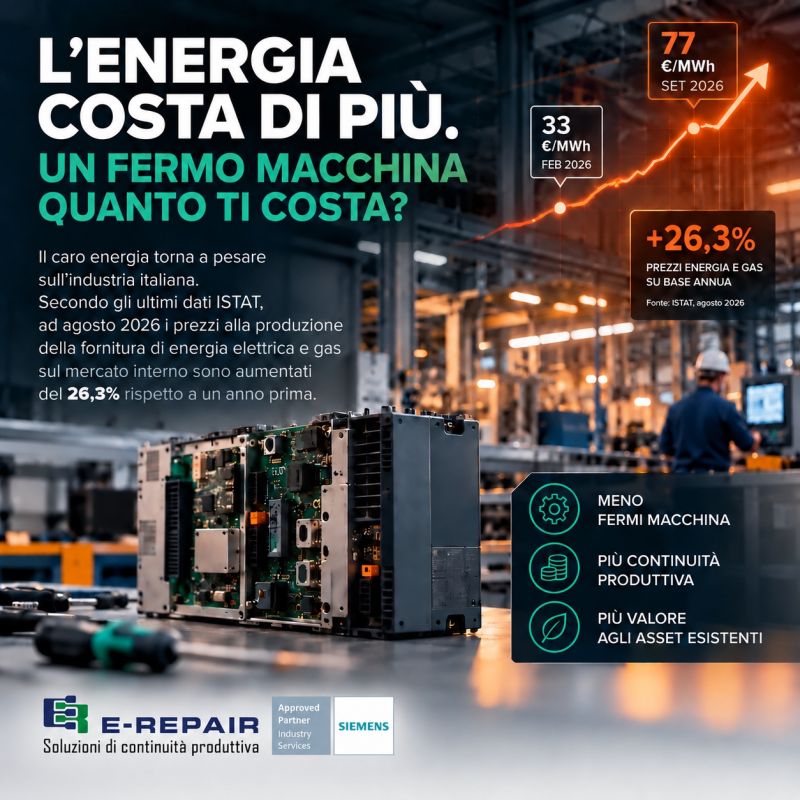
This applies in particular to industrial electronic components, on which machinery and automated lines depend. A failure, combined with difficulty in sourcing or quickly receiving a spare part, can prolong downtime and make it harder to resume operations.
♻️ Repair and remanufacturing to support the supply chain
In this context, repairing and remanufacturing industrial electronic components can be one of the solutions to consider for better spare parts management and less dependence on the immediate availability of new products.
Recovering a faulty component, where technically possible, makes the most of resources already in the supply chain and supports plant continuity. Having remanufactured spare parts and managing critical components preventively can also help prepare the company for possible supply difficulties.
There is no single solution that eliminates every logistics risk, but planning that involves maintenance, purchasing and suppliers can help companies respond more promptly.
🤝 E-Repair at companies’ side
For years E-Repair has supported companies in managing and maintaining industrial electronics through repair, zero-hour remanufacturing, technical support and spare parts management services.
The aim is to help customers keep their plants efficient, make the most of existing components and build maintenance strategies more focused on production continuity.
In a scenario where supply chains are increasingly interconnected, preventing downtime and preparing for critical issues means protecting not just the individual plant, but also the relationships and commitments that link every company to its customers and suppliers.
👉 Want to find out how to improve the management of your company’s critical electronic components? Contact E-Repair.