ES
 DE
 FR
 IT



🌍 The gradual resumption of transits through the Strait of Hormuz is an important signal for energy markets, international logistics and manufacturing companies.
But the reopening of a strategic route does not automatically erase the effects of the crisis.
Supplies need to be realigned, stocks rebuilt, costs stabilised and accumulated delays recovered. Above all, companies need to understand how prepared they really are to face another disruption.
⚙️ The restart after Hormuz reminds us that industrial resilience is not born during the emergency: it is built beforehand.
From crisis to restart: the new phase after Hormuz
The gradual resumption of shipping in the Strait of Hormuz does not mean an immediate return to normal.
Rather, it marks the start of a new phase: restarting, realigning supplies, gradually stabilising energy costs and companies’ ability to react after a period of great uncertainty.
A geopolitical crisis can ease quickly on the diplomatic front, but its effects on companies often take much longer to absorb.
🚢 Ships must resume their routes.
📦 Goods must flow regularly again.
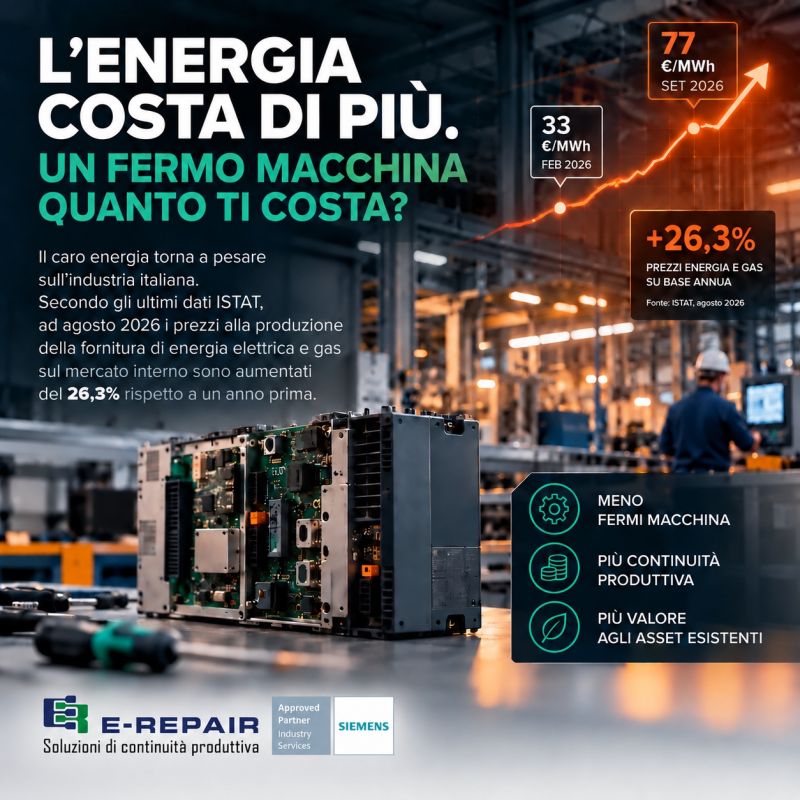
⚡ Energy supplies must stabilise.
🏭 Companies must rebuild stocks, production schedules and operating margins.
The restart is therefore not simply a return to the starting point. It is a complex process involving energy, logistics, procurement, production and company organisation.
🌐 Hormuz and the fragility of global supply chains
The Strait of Hormuz is one of the most strategic maritime passages for the international transport of energy, raw materials and industrial products.
The problems that affected this area have once again shown how exposed companies are to external events they cannot directly control:
⚠️ geopolitical crises;
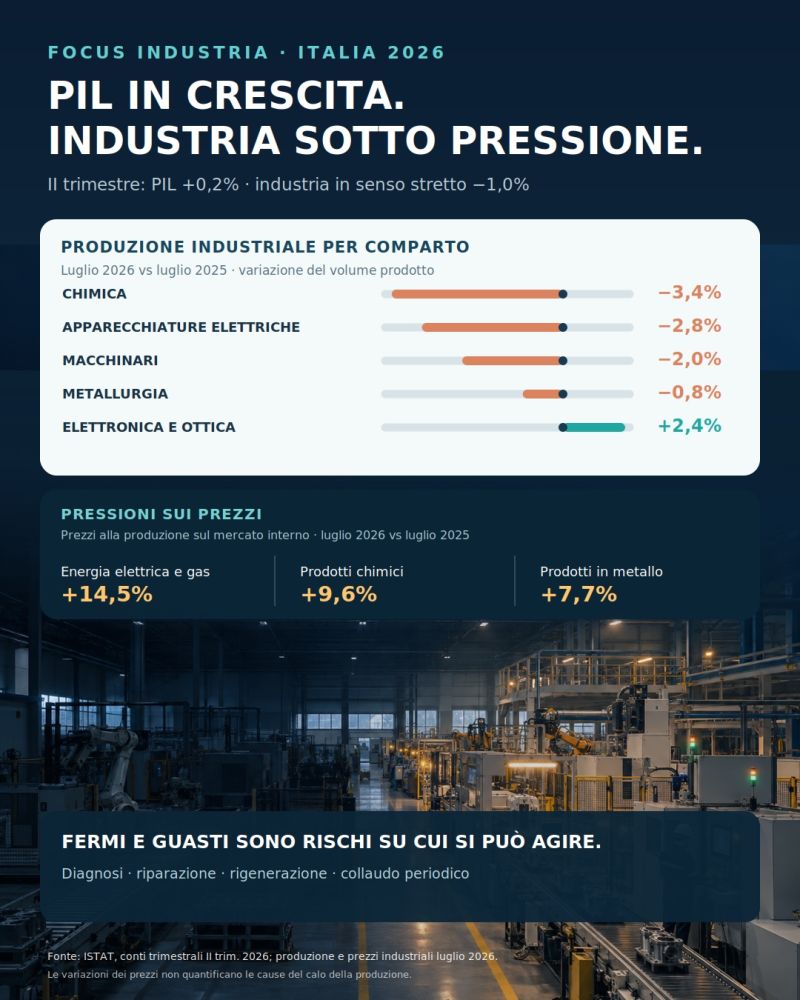
📈 volatile energy prices;
🚢 slowdowns and diversions of shipping routes;
📦 delays in the availability of raw materials;
💶 higher logistics and insurance costs;
🔗 supply chain disruptions;
⏳ longer delivery times.
Even a company far from the Middle East can feel the effects through higher energy costs, reduced component availability, supplier delays or difficulty meeting production schedules.
Globalisation has made industrial supply chains more efficient, but also more interdependent.
When a strategic passage slows down, the consequences can quickly spread along the entire supply chain.
📦 Reopening does not immediately eliminate the effects of the crisis
When a trade route gradually becomes accessible again, the accumulated problems do not disappear at the same moment.
Companies may still face:
- order backlogs;
- insufficient stocks;
- components that are still hard to source;
- rescheduled supplies;
- unstable energy costs;
- more expensive transport;
- longer delivery times;
- the need to reorganise production.
The system must absorb the inefficiencies generated during the disruption.
That is why an effective restart requires planning, flexibility and the ability to quickly identify operational priorities.
It is not enough to wait for the market to return to how it was.
Companies need to understand which vulnerabilities have emerged and turn them into concrete improvement actions.
🛡️ What does it mean to be a resilient company?
A resilient company is not one that never suffers shocks.
It is an organisation that has built in advance the tools it needs to:
✅ absorb the initial impact;
✅ protect essential activities;
✅ quickly adapt processes;
✅ find alternative solutions;
✅ reduce recovery times;
✅ restart faster than competitors.
Resilience therefore does not depend only on financial resources or company size.
It also depends on knowing your own processes, the ability to plan and having operating procedures already in place.
A resilient organisation knows its critical points.
It knows which components could stop a plant, which suppliers cannot easily be replaced, which skills must be preserved and which activities must be restored first.
🏭 What does resilience mean for manufacturing?
For a manufacturing company, industrial resilience translates into concrete actions.
⚙️ Protecting production continuity
Every company should identify the plants, machinery and components whose unavailability could bring production to a halt.
Not all elements are equally critical.
A single PLC, inverter, operator panel, drive or power supply can be a weak point for the entire line.
📦 Reducing dependence on critical supplies
Relying on a single supplier, on components from a single geographical area or on equipment with very long lead times can significantly increase operational risk.
Diversifying sources of supply, identifying technical alternatives and building strategic stocks reduces exposure to external disruptions.
🔧 Keeping plants and automation efficient
During a supply crisis, a failure becomes even harder to manage.
If a new component is unavailable or takes months to deliver, the maintenance and repairability of existing equipment take on strategic value.
Keeping plants efficient means:
- reducing the risk of sudden failures;
- extending the service life of equipment;
- preventing production downtime;
- limiting dependence on the availability of new parts;
- improving the company’s ability to respond.
💾 Protecting programs, configurations and data
The value of an industrial component does not lie solely in the hardware.
PLCs, operator panels, numerical controls and programmable devices can contain programs, parameters and configurations essential to the machine’s operation.
Losing this data can make restoring the plant much more complex.
That is why technology backups must be considered an integral part of the operational continuity strategy.
♻️ Investing in remanufacturing and the circular economy
Remanufacturing industrial electronic components makes it possible to recover faulty, obsolete or hard-to-source equipment.
This approach makes it possible to:
🔧 keep existing installations running;
⏱️ reduce downtime;
📦 limit dependence on new supplies;
🌍 reduce the use of raw materials;
♻️ extend the service life of components;
💶 contain the costs of replacing entire plants.
In an unstable international context, the circular economy is not just an environmental choice.
It also becomes a tool for industrial autonomy and resilience.
🔩 An obsolete component can become a strategic risk
Many production lines still use equipment that is reliable but no longer available on the market.
As long as they keep working, these components may seem a secondary issue.
But when a failure occurs, the company may discover that:
⚠️ the new spare part is no longer produced;
⏳ delivery times are incompatible with production;
💶 replacement requires significant investment;
🔄 the new component is not directly compatible;
💾 programs and configurations have not been saved;
🏭 the work requires changes to the entire plant.
Obsolescence management should therefore not start after the failure.
Critical equipment needs to be mapped in advance, deciding which components can be repaired, remanufactured, duplicated or kept as strategic spare parts.
🚨 From reactive to strategic maintenance
For a long time, industrial maintenance was seen mainly as a technical activity: a function called in when a machine stopped working.
Today, this approach is no longer enough.
In a context of geopolitical instability, supply difficulties and cost volatility, maintenance becomes a strategic lever.
An advanced strategy should include:
🛠️ preventive maintenance;
📊 critical issue analysis;
💾 program backups;
♻️ component remanufacturing;
📦 preparation of strategic spare parts;
🔍 obsolescence monitoring;
🚨 emergency response procedures;
🤝 identifying technical partners in advance.
The question to ask is not only how much it costs to keep a plant efficient.
It is also how much it could cost not to be able to restore it when production needs it most.
🤝 How can E-Repair help?
E-Repair supports companies in managing industrial electronics and building strategies for production continuity.
Through its in-house laboratory and technical expertise, E-Repair can work on inverters, PLCs, operator panels, drives, power supplies, numerical controls and other industrial electronic components.
The main services include:
🔧 Component-level repair
Diagnosis and repair of faulty industrial electronic equipment, including obsolete units or those no longer supported by the manufacturer.
♻️ GREEN REGENERATION
Equipment remanufacturing through inspections, replacement of wear-prone components and functional testing.
📦 GREEN READY2GO
Availability or preparation of remanufactured components ready to quickly replace a faulty unit.
🛡️ SAFETY REPLACEMENT
Creation of a technical stock dedicated to the plant’s most critical components.
💾 Data backup
Saving programs, parameters and configurations, where technically possible.
🧼 Technical cleaning
Professional cleaning of electronic components to remove dust, contaminants and residues that can compromise their reliability.
🚨 DISASTER RECOVERY
Support for companies after unforeseen events, damage or situations that put plant continuity at risk.
The aim is not just to repair a component after a failure.
It is to help the company reduce the risk of downtime in advance and build a faster response capability.
🌱 Resilience, sustainability and competitiveness
Industrial resilience and sustainability are not separate goals.
Extending the service life of a component, avoiding premature plant replacement and reducing dependence on new supplies brings environmental, economic and operational benefits.
Maintenance and remanufacturing help to:
🌍 reduce raw material consumption;
♻️ limit the production of electronic waste;
🚚 limit the impact of new production and transport;
🏭 protect investments already made;
💶 reduce replacement costs;
⚙️ maintain process continuity for longer.
A sustainable company is not only one that reduces its environmental impact.
It is also one that builds stronger, more efficient processes able to withstand crises.
🚀 Turning the emergency into an opportunity for improvement
Every crisis reveals vulnerabilities that may remain hidden under normal conditions.
It can expose dependence on a single supplier, missing spare parts, lack of backups or obsolete components that were never recorded.
Simply getting through the emergency means risking being unprepared for the next crisis.
Turning it into an opportunity for improvement, on the other hand, means:
✅ analysing what did not work;
✅ identifying weak points;
✅ updating procedures;
✅ building stocks and alternatives;
✅ scheduling maintenance;
✅ strengthening operational continuity.
True resilience comes from the ability to learn from events and turn experience into a stronger structure.
❓ How prepared are we not to stop next time?
The restart after the Strait of Hormuz crisis reminds us that no company can control geopolitical events, energy markets or international routes:
- But it can control its own level of preparedness.
- It can know its critical components.
- It can protect programs and configurations.
- It can prepare strategic spare parts.
- It can invest in maintenance and remanufacturing.
- It can build procedures that reduce response times.
- That is why the real question is not just:
When will everything be back to normal? The more important question is:
How prepared are we not to stop next time? Because production continuity cannot be improvised during a crisis.
🔧 It is built every day, through prevention, skills, maintenance and the ability to regenerate what keeps industry moving.