ES
 DE
 FR
 IT



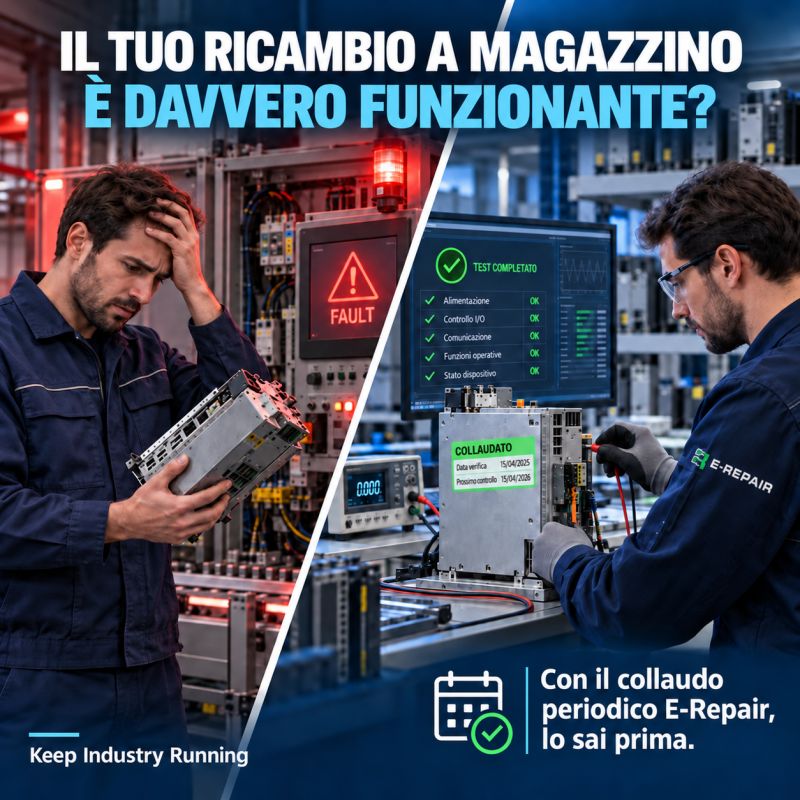
The spare part is already in your warehouse. But will it work when you need it?
Periodic testing of electronic spares helps check the condition of spare parts and prepare the response to machine downtime. Because having the component on the shelf matters. Knowing what condition it is in matters even more.
The machine stops. The technician identifies the faulty component and takes the spare part from the warehouse. It’s the right one, it’s available and it looks in good condition.
Then comes the moment of replacement. And the spare part doesn’t work.
It’s a situation that can complicate the restart just when every minute counts. A component stored in the warehouse, even if unused, is not automatically ready to go into service.
That is why managing electronic spares should also include checking their condition and functionality.
On the shelf doesn’t mean safe from time
Electronic equipment can be affected by time and storage conditions even when it is not in use.
Depending on the device, parts such as capacitors and batteries may need attention after long periods of inactivity. Humidity, dust and unsuitable temperatures can also compromise the condition of components and connections.
External appearance alone cannot reveal all this. An intact housing and a readable label identify the spare part, but do not confirm that it works.
So the useful question is: when was it last checked, and with what result?
The right part number is only the first check
To use a spare part, it may also be necessary to check its compatibility with the application.
Hardware and firmware versions, configurations, programs and parameters can affect the replacement. A working device may therefore need further work before it can be used on the plant.
The availability of backups also matters. A file archived without details of the machine or version it refers to can make restoring more difficult.
Preparing the spare part therefore involves two aspects: the condition of the equipment and the information needed to use it correctly.
What periodic testing of electronic spares includes
E‑Repair offers a service of periodic testing of the customer’s electronic spares, through scheduled checks based on the equipment and production needs.
Activities may include:
-
Identification and inspection of components: recording of part numbers, versions and condition of the device.
-
Functional check and testing: tests suited to the type of equipment, to verify its operation under test conditions.
-
Check of available programs, parameters and backups: review of the information needed for restoring, within the agreed scope.
-
Reporting of necessary interventions: identification of any repair or remanufacturing needs.
-
Traceability of checks: recording of the component’s condition, the tests performed and the results.
-
Scheduling of subsequent checks: setting deadlines based on criticality, storage conditions and the manufacturer’s recommendations.
Testing describes the condition of the device at the time of the check and under test conditions. It does not eliminate every possible future failure, but it provides a concrete basis for managing spares more consciously.
Which spare parts should you start with?
Not all spares are equally important for production.
To organise checks, it is useful to start with the components whose unavailability could have the biggest consequences. Aspects to consider include:
-
the role of the component in the machine or line;
-
the time needed to find an alternative;
-
the availability of other compatible spare parts;
-
the time elapsed since the last check;
-
the need for specific configurations, programs or parameters.
This assessment makes it possible to set priorities and build a sustainable programme, focusing on the most strategic spares.
A spare parts warehouse should help production restart
Electronic spares are an investment. Their operational value, however, depends on being able to use them when needed.
Knowing the condition of spare parts makes it possible to plan any interventions before an emergency, organise the information needed for replacement and be better prepared to respond to a failure.
The warehouse thus becomes a resource for production continuity: identified components, documented checks and clear priorities.
E‑Repair: preparing today the spare part you’ll need tomorrow
E‑Repair supports companies in checking their electronic spares and assessing any repair and remanufacturing work.
The aim is to help customers know the condition of their spare parts and plan their care, linking warehouse activities to the needs of the plant.
Because having the right component on the shelf is not enough. You need to know whether it is ready and what it takes to put it into service.
Contact E‑Repair to plan periodic testing of your electronic spares.
Keep Industry Running.