ES
 DE
 FR
 IT









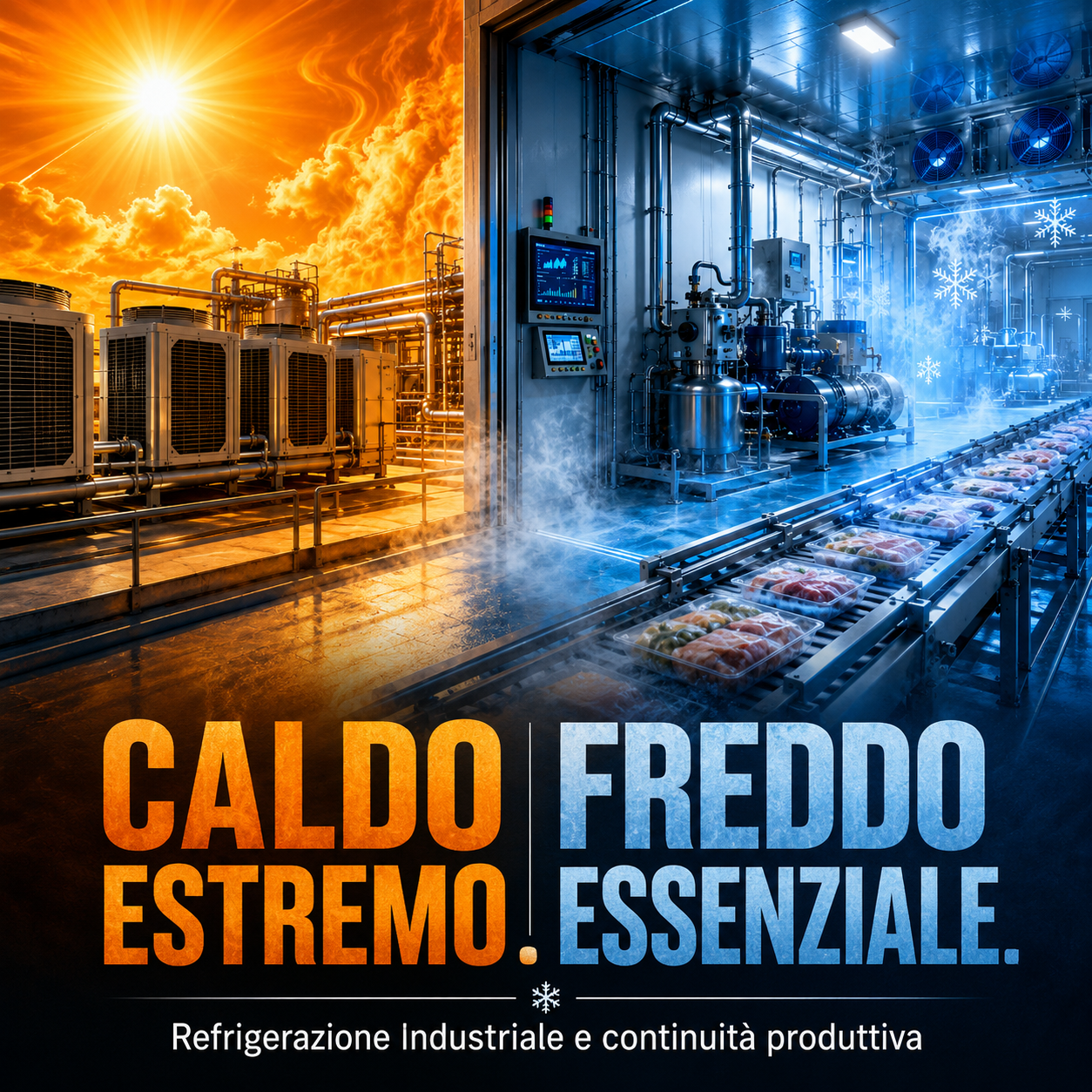
🔥 When temperatures rise, industrial refrigeration systems have to work harder and often without interruption.
The cold chain is not just about cold rooms, supermarkets or refrigerated transport. Many manufacturing companies depend on cooling and air-conditioning systems to keep processes stable, protect product quality and ensure machinery works properly.
Inverters, PLCs, operator panels, power supplies and drives therefore become essential to the continuity of the entire plant.
❄️ Protecting the cold chain means protecting production.
When heat puts the cold chain and production continuity to the test
When temperatures rise, for many companies it is not just the hottest season of the year that begins.
It is also one of the most delicate periods for industrial refrigeration, cooling and air-conditioning systems.
In fact, the cold chain is not only about cold rooms, supermarkets and the transport of refrigerated goods.
Many manufacturing companies depend on temperature control to ensure:
✅ product quality;
✅ process stability;
✅ proper operation of machinery;
✅ preservation of raw materials;
✅ plant continuity.
This is the case, for example, for the food and beverage industries, the pharmaceutical, chemical and cosmetics sectors, plastics processing and all activities that use refrigeration systems to cool machinery, fluids, production areas or specific process stages.
🌡️ More heat means more stress for plants
During the summer months, chillers, refrigeration units, pumps, compressors, fans and industrial air-conditioning systems have to work harder and often without interruption.
Higher outdoor temperatures can lead to:
🔥 longer operating cycles;
⚡ higher energy consumption;
❄️ reduced cooling efficiency;
🌡️ higher temperatures inside control cabinets;
⚙️ greater stress on inverters, PLCs, power supplies, drives and operator panels;
🔩 faster wear of fans, capacitors and electronic components.
So the problem is not only the possible failure of the refrigeration system.
Heat can put pressure on the entire electronic and automation infrastructure that controls the plant and runs the production process.
🏭 When cooling stops, production can stop too
In a manufacturing company, a fault in the refrigeration system can have consequences far greater than the cost of the repair itself.
Loss of temperature control can lead to:
⚠️ changes in product characteristics;
📦 deterioration of raw materials and semi-finished products;
⛔ slowdown or stoppage of the line;
🗑️ more production scrap;
📉 failure to meet quality standards;
🚚 delivery delays;
💶 higher energy and operating costs;
🚨 need for urgent interventions.
In the food, pharmaceutical, chemical and cosmetics sectors, even a small temperature change can compromise the quality or compliance of an entire production batch.
In other industrial sectors, a lack of cooling can cause machinery to overheat, reduce machining precision or trigger an automatic plant shutdown.
⚙️ Industrial electronics are an integral part of the cold chain
Behind every industrial refrigeration system are numerous electronic and automation components:
🔹 inverters controlling pumps, compressors and fans;
🔹 PLCs managing cycles, temperatures and alarms;
🔹 operator panels for plant control and supervision;
🔹 power supplies and electronic modules;
🔹 control boards;
🔹 sensors and monitoring systems;
🔹 drives for handling and process control.
These components often operate inside control cabinets exposed to high temperatures, dust, humidity, contamination and poor ventilation.
In hot weather, a worn fan, a clogged filter, a degraded capacitor or an already heavily stressed inverter can quickly become the cause of plant downtime.
🛠️ Prevention must start before the summer peak
Cold chain continuity cannot depend only on the ability to intervene after a failure.
It is important to identify the most critical components in advance and prepare a maintenance plan that may include:
🔧 checking the condition of inverters and drives;
🌬️ inspecting fans, heat sinks and ventilation systems;
🧼 technical cleaning of electronic components;
💾 backing up PLC and operator panel programs;
♻️ preventive remanufacturing of the most heavily stressed equipment;
📦 availability of strategic spare parts;
🌡️ monitoring temperatures inside control cabinets;
🚨 defining rapid response procedures.
Scheduling these activities reduces the risk of a failure occurring exactly when the plant is needed most.
♻️ Repair and remanufacture to protect production continuity
When an electronic component fails, immediate replacement is not always possible.
Many industrial plants use PLCs, inverters, drives and operator panels that are obsolete or no longer available on the market.
In other cases, the lead time for a new component is incompatible with production needs.
Component-level repair and industrial remanufacturing make it possible to:
🔧 recover faulty or obsolete equipment;
⏱️ reduce downtime;
🏭 avoid replacing the entire plant;
💾 keep existing configurations, programs and connections;
♻️ extend the service life of production systems;
🌍 reduce the use of new raw materials and the production of electronic waste.
For the most critical equipment, it can also be useful to prepare a remanufactured unit in advance, configured and ready to install in an emergency.
🤝 How can E-Repair help?
E-Repair supports companies with preventive, corrective and strategic management of the industrial electronics used in refrigeration, cooling and air-conditioning systems.
The main services include:
🔧 Component-level repair in our in-house laboratory
Work on inverters, PLCs, operator panels, power supplies, drives, electronic boards and other industrial automation devices.
♻️ Industrial remanufacturing
Restoring equipment functionality through inspections, preventive replacement of wear-prone components, testing and technical checks.
💾 Data backup and recovery
Saving programs and configurations of PLCs, operator panels and programmable devices, where technically possible.
🧼 Technical cleaning
Technical cleaning of electronic components to remove dust, residues, contaminants and substances that can compromise their reliability.
📦 Availability of ready-to-use remanufactured units
Preparation of strategic equipment to reduce recovery times in the event of failure.
🚨 Support in case of plant downtime and emergencies
Interventions aimed at reducing downtime and quickly restoring process operation.
❄️ Heat must not turn into production downtime
The summer season puts refrigeration systems and the entire industrial automation that keeps them running to the test.
Protecting the cold chain therefore means protecting:
🏭 productivity;
✅ quality;
⚙️ plant efficiency;
📦 continuity of supply;
💶 the company’s economic sustainability.
Knowing the plant’s weak points in advance, carrying out planned maintenance and having repairable, remanufactured or ready-to-swap electronic components can make the difference between a managed issue and sudden production downtime.
🔥 Because when the temperature rises, reliability must not fall.