ES
 DE
 FR
 IT



Summer reflections: repairing in a world that keeps destroying
August is traditionally the month for taking a break.
Many companies slow down, some production plants stop and people take a few days to recharge, gather their thoughts and look at what is happening from a different perspective.
But this summer it is hard to look away from the wars and geopolitical tensions that continue to sweep across the world.
An increasingly vulnerable industrial system
In recent years, industry has realised how fragile a production model can be when it relies on very long supply chains and heavy dependence on a limited number of suppliers and countries.
A conflict, the closure of a trade route or a geopolitical tension can have immediate consequences:
🔹 longer delivery times;
🔹 difficulty sourcing spare parts;
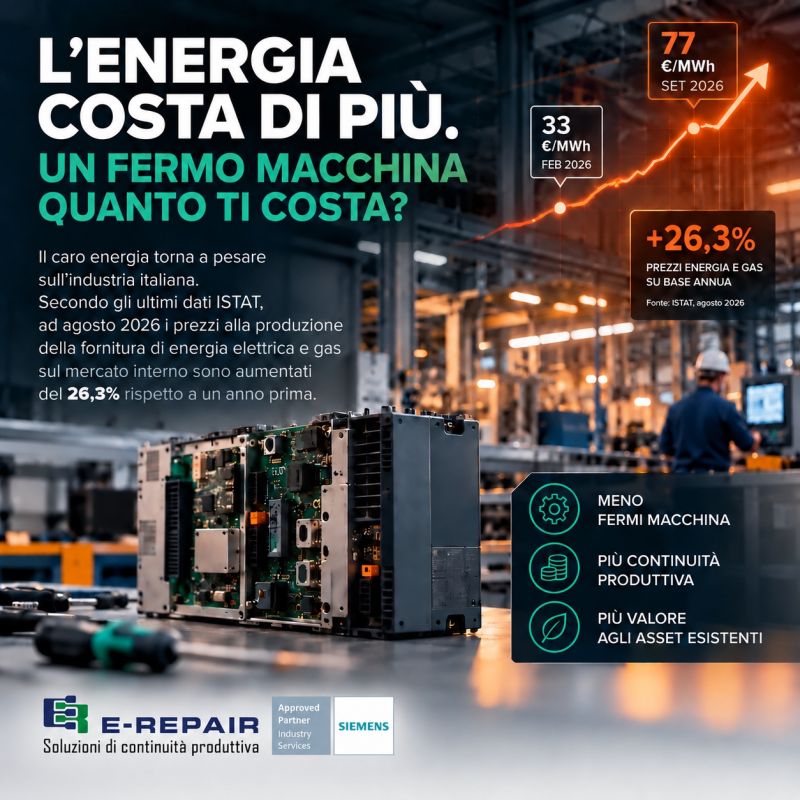
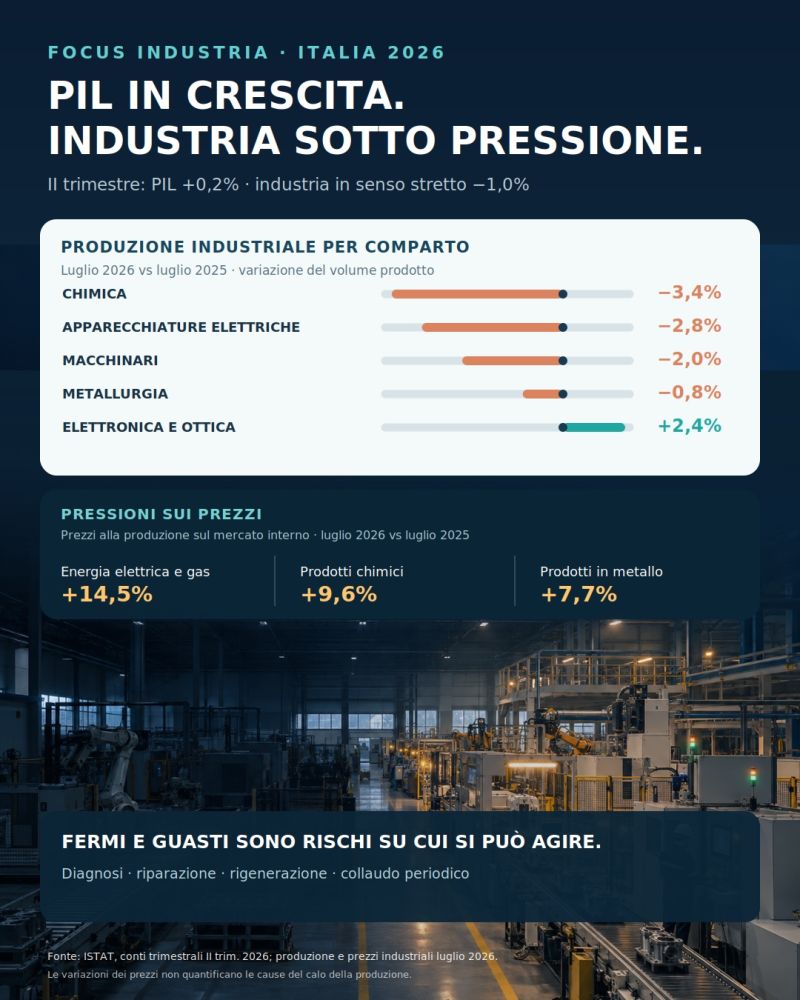
🔹 higher energy and transport costs;
🔹 unavailability of raw materials and electronic components;
🔹 greater risk of plant downtime.
💡 Perhaps industry too should take advantage of the summer break to stop and reflect for a moment.
For decades we have mainly followed a linear model:
extract, produce, use, replace and dispose.
A model that has fostered industrial growth, but which today shows its environmental, economic and strategic limits more clearly.
The circular economy as a culture of preservation
The circular economy proposes a different approach.
It does not just mean recycling a product when it has reached the end of its life cycle. Above all, it means trying to prevent that cycle from ending prematurely.
It means:
🔹 preserving what we have;
🔹 carrying out proper maintenance;
🔹 repairing a component rather than replacing it;
🔹 remanufacturing equipment;
🔹 recovering spare parts and materials that can still be used;
🔹 extending the life of plants.
In this sense, the circular economy is not only about how we manage materials.
🌱 It is about how we choose to recognise and preserve the value of things.
The role of industrial maintenance
For E-Repair, Siemens Approved Partner, it is precisely in industrial maintenance that these principles become concrete.
⚙️ Repairing an industrial electronic component means extending its service life and avoiding a replacement that may not yet be necessary.
🔄 Remanufacturing equipment makes it possible to work on components subject to wear, recovering devices that can continue to perform their function within the plant.
📦 Making an obsolete spare part available again reduces dependence on new supplies, which often come with long delivery times or limited availability.
🧼 Scheduling preventive maintenance helps identify anomalies, contamination and signs of deterioration before they can turn into sudden failures.
💾 Keeping up-to-date backups of PLCs, CNCs, HMIs and drives means protecting not just a piece of equipment, but also the wealth of configurations, programs and knowledge on which production is based.
🏭 Planning maintenance therefore means protecting production continuity, technical skills and the value the company has built over time.
Repairing also means reducing dependencies
In a world shaken by wars, geopolitical tensions and increasingly vulnerable supply chains, keeping what we have running is not just an environmental choice.
It is also a choice of:
🔹 industrial resilience, because it reduces the risk of downtime;
🔹 autonomy, because it limits dependence on new supplies;
🔹 responsibility, because it uses resources more consciously;
🔹 continuity, because it protects plants and production;
🔹 competitiveness, because it reduces the economic impact of failures and unavailability.
Of course, we do not wish to compare maintenance work with the tragedy of conflict.
War always remains a human, social and environmental tragedy.
But we can draw one reflection from it: while war destroys, the culture of maintenance teaches us to preserve, recover and take care of resources.
A topic that should never go out of fashion
In times of greater instability, attention tends to focus on immediate emergencies: energy, raw materials, logistics and security of supply.
The risk is that the circular economy is seen as a secondary issue or a goal to postpone until calmer times.
In reality, it is precisely in times of crisis that the principles of circularity become even more important.
Repairing, remanufacturing and maintaining means making better use of what is already available.
It means reducing waste, limiting demand for new resources and increasing companies’ ability to respond to supply disruptions.
The circular economy is therefore not an alternative to industrial resilience.
💡 It is one of the tools for building it.
Before replacing, let’s try to preserve
Perhaps this summer break can be an opportunity to ask ourselves a few questions.
How much equipment is replaced without first checking whether it can be repaired?
How many components are considered obsolete, even though they could be remanufactured?
How many failures could be avoided through scheduled preventive maintenance?
How many resources could be preserved through more conscious management of plant life cycles?
The future of industry could start from a few very simple principles:
🔹 before replacing, let’s try to preserve;
🔹 before producing again, let’s try to repair;
🔹 before considering something outdated, let’s try to give it back its value.
Because taking care of plants does not just mean avoiding production downtime.
It means protecting resources, skills and industrial value.
And, in a world that keeps destroying, choosing to repair can also become a small but concrete act of responsibility.