Español (España)
  Deutsch (Deutschland)
  Français
  Italiano









Global export, EU-India agreements and production continuity: the invisible variable of industrial competitiveness
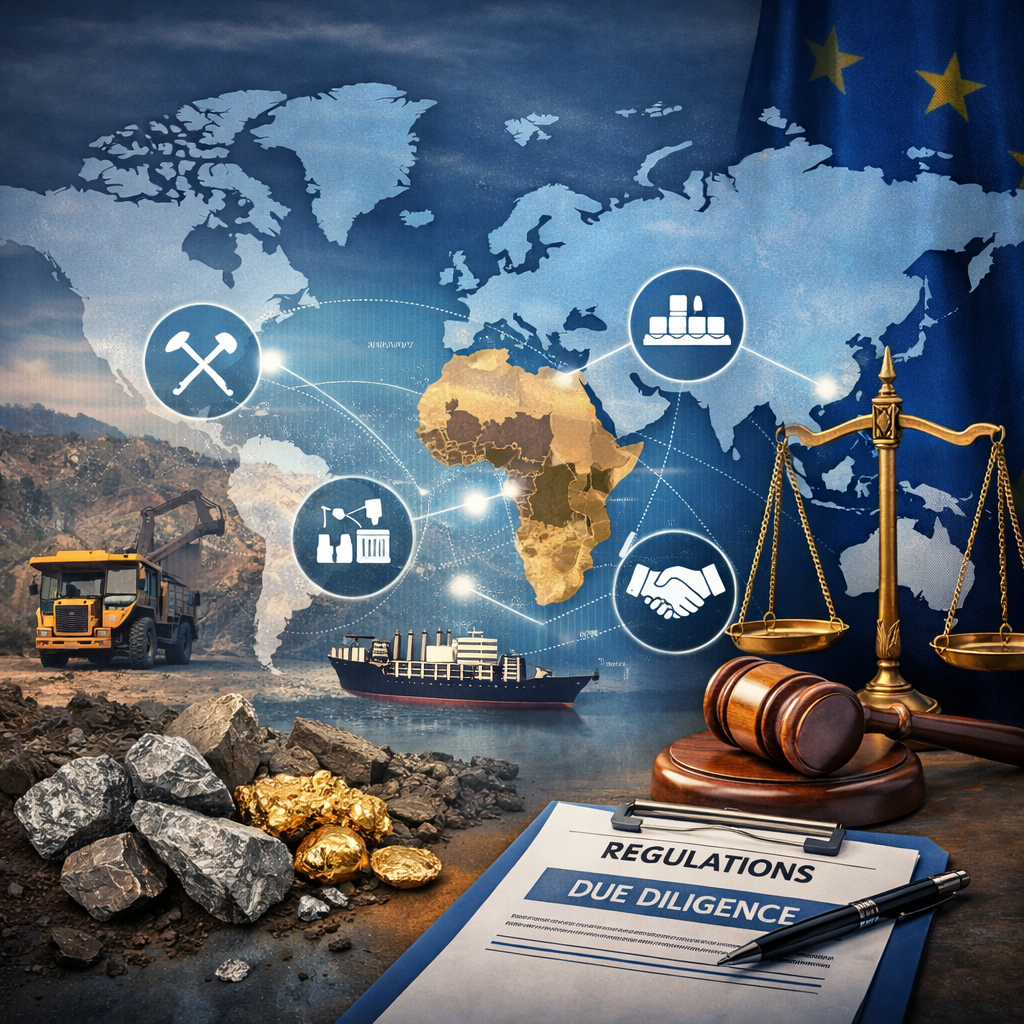
The opening of new international trade corridors — such as the agreements between the European Union and India — represents an extraordinary opportunity for the manufacturing industry.
More markets.
More volumes.
More competitiveness.
But precisely when companies begin exporting steadily, a critical factor emerges, often underestimated until the first operational incident: production continuity!
When exporting, maintenance changes its nature
Operating in international markets radically changes production parameters.
It is no longer enough to “produce well”.
You must produce continuously.
An exporting company must guarantee:
- strictly scheduled delivery times
- consistent and repeatable quality
- immediate availability of the production line
- In the global market, the customer does not wait: They replace the supplier.
- Plant downtime is therefore no longer an internal technical issue, but a contractual event.
The consequences are not only operational
A production interruption can generate:
- financial penalties
- loss of multi-year contracts
- international reputational damage
- exclusion from vendor lists
For this reason, maintenance stops being a technical function and becomes an industrial risk function.
The paradigm shift: from maintenance to industrial strategy
In export-oriented production, electronic maintenance evolves in three dimensions:
- Production risk management
Prevention of operational interruptions - Protection of industrial value
Safeguarding orders, contracts and margins - Sustainability leverage
Reduction of waste, CO₂ and supply-chain impact
Maintenance therefore becomes part of industrial governance, not just the workshop.
The critical point: industrial electronics
Within the production plant, electronics is the most delicate component.
It is the one that:
- can fail without progressive warning signals
- is subject to technological obsolescence
- is often unavailable on the market
- can stop entire production lines
- The real risk is not the failure.
- The real risk is the time required to return to operation.
And this is exactly where many companies discover too late the difference between technical assistance and production continuity.
Operational continuity and component availability
In global industry, the critical question is not:
“Who repairs the component?” but “How quickly can I restart?”
International competitiveness depends on the ability to:
- source obsolete electronics
- reduce downtime
- maintain consistent production standards
- avoid supply chain disruptions
The role of industrial servitization
To meet these requirements, an advanced maintenance model was created:
MAAS – Maintenance as a Service
An integrated approach combining:
- specialized technical laboratory
- on-site interventions
- remote support
- advance availability of components
- electronic lifecycle management
It is no longer about repairing a failure.
It is about guaranteeing operation.
Production continuity and industrial sustainability
Export today also requires environmental compliance and traceability.
Companies must demonstrate:
- supply chain risk control
- reduction of environmental impact
- obsolescence management
- ESG responsibility
Advanced maintenance directly contributes to these objectives:
- extends equipment life
- reduces electronic waste
- avoids premature replacements
- limits Scope 3 emissions
Production continuity therefore also becomes a driver of industrial sustainability.
Why it becomes a strategic choice
Trade agreements open markets.
But operational reliability allows companies to remain in them.
Manufacturing companies are progressively moving from a vision:
maintenance = cost
to a vision:
production continuity = competitiveness
🟢 Content Page Article – Focus on production continuity of Italian industry and new export agreements between Europe and India