






🌍 Geopolitics, trade tensions and industrial maintenance: why today it is a strategic lever
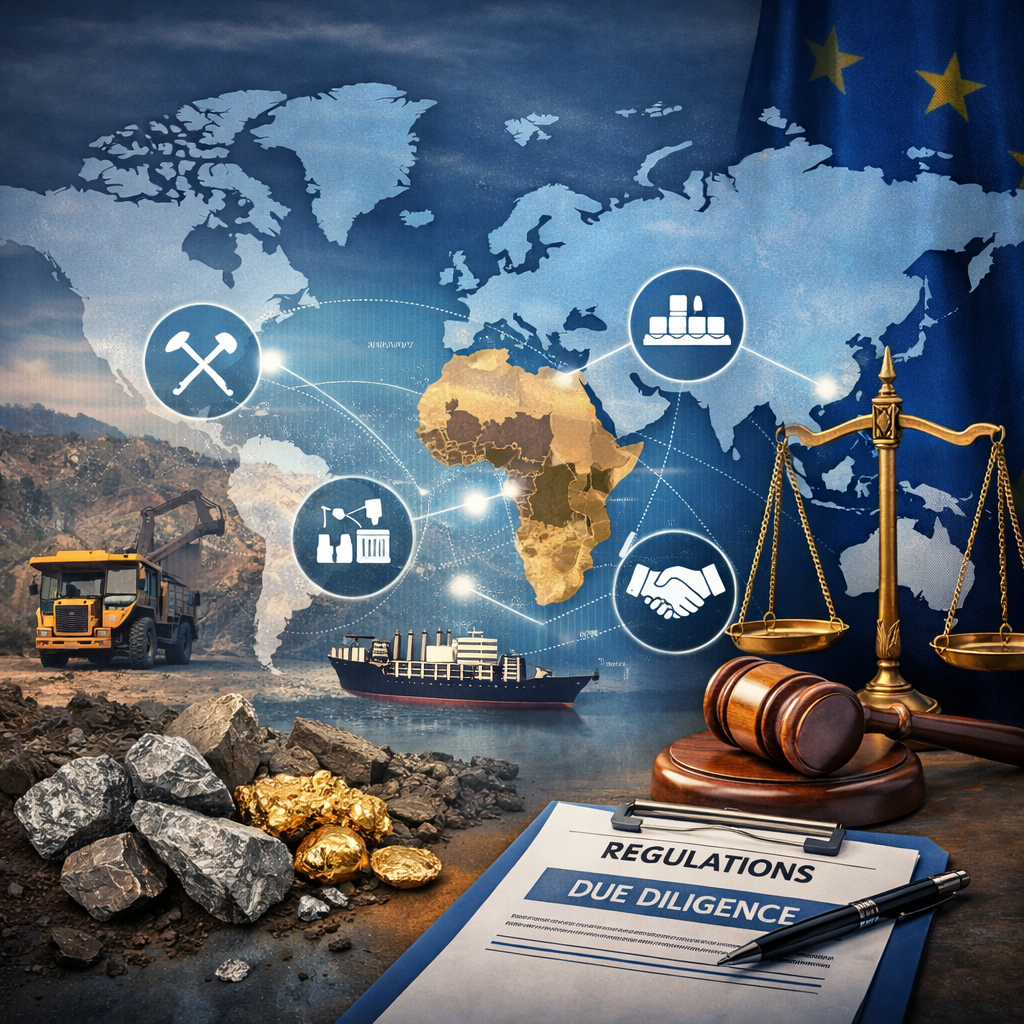
In recent years, the global scenario has changed profoundly 🌐
Industrial companies are operating in an increasingly unstable context ⚠️, characterised by:
tensions between 🇺🇸 the USA and 🇨🇳 China
conflicts in the Middle East area ⚓
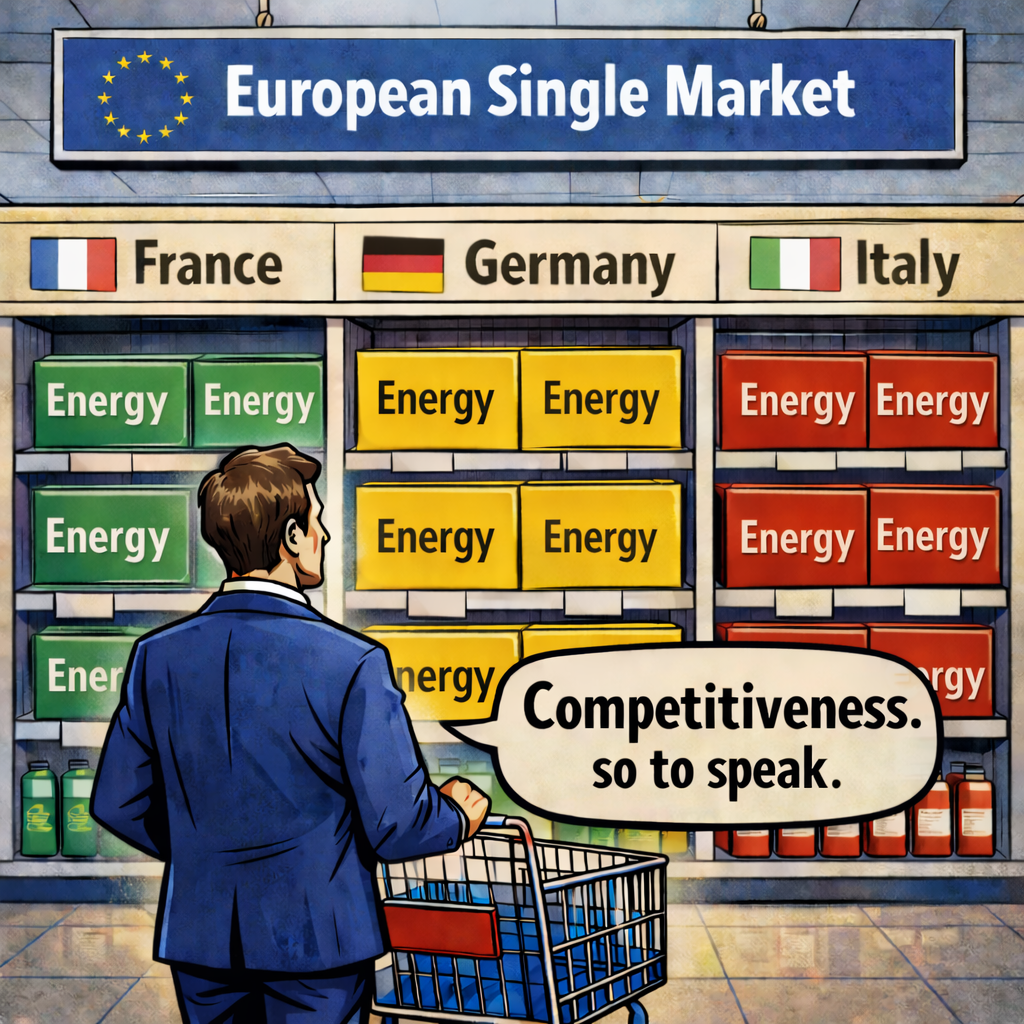
energy instability linked to the war in 🇺🇦 Ukraine ⚡
reshoring and the revision of global supply chains 🔄
🔍 Fragile supply chain: what is really changing
These phenomena are not just “high-level” geopolitics.
They have a direct and concrete impact on:
availability of raw materials 🧱
electronic components and microchips 🔌
delivery times ⏱️
logistics and energy costs 💰⚡
👉 But there is one aspect that is still discussed far too little:
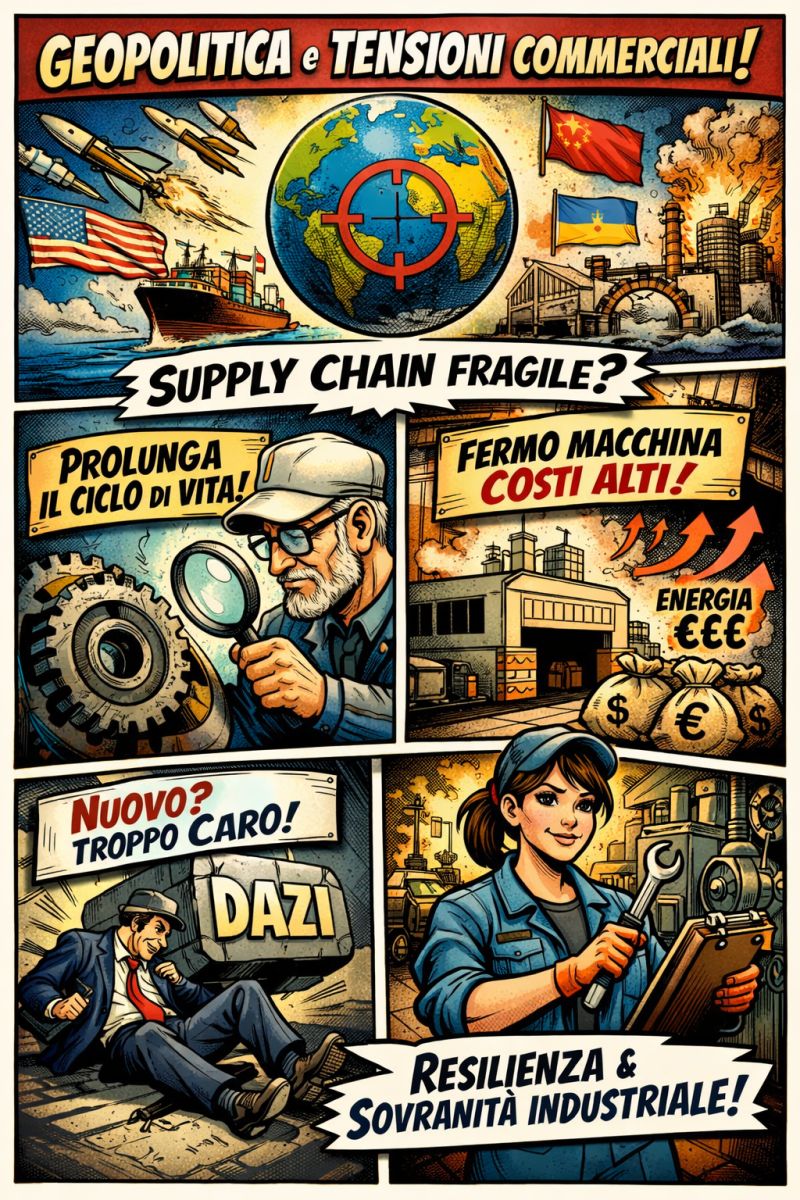
When the supply chain is fragile, maintenance becomes geopolitical strategy 🌍
🔧 Why maintenance becomes strategic
In an unstable scenario, the rules of the game change radically 🔄
1️⃣ Procurement times out of control 📦
If a component no longer arrives in 48 hours but in 6 months ⌛, replacement is no longer a sustainable solution.
➡️ The only alternative is to extend the life cycle of existing assets ♻️
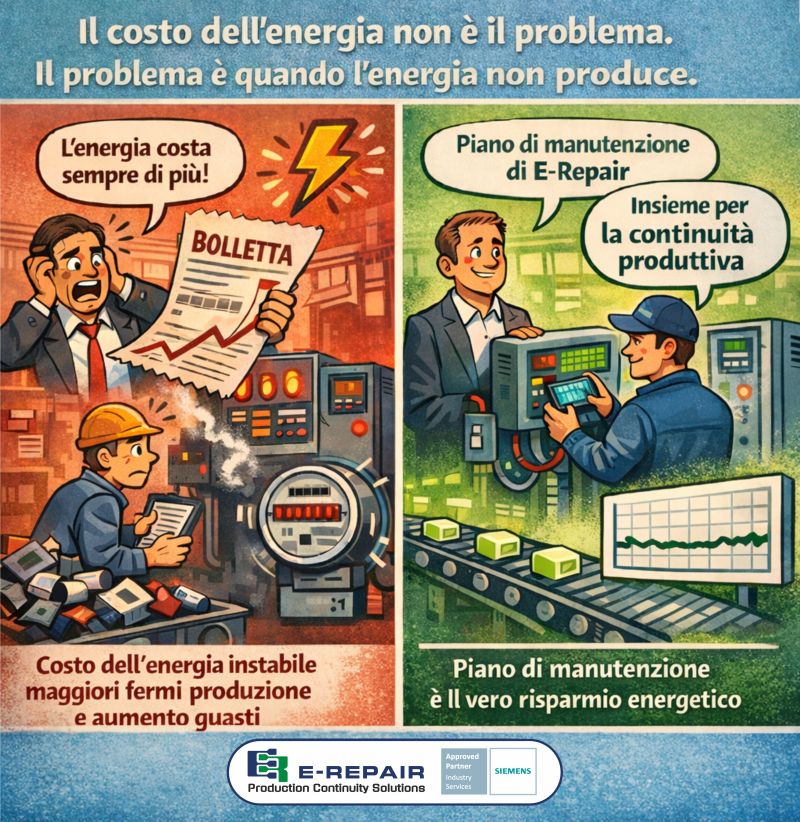
2️⃣ Unpredictable energy costs ⚡📉📈
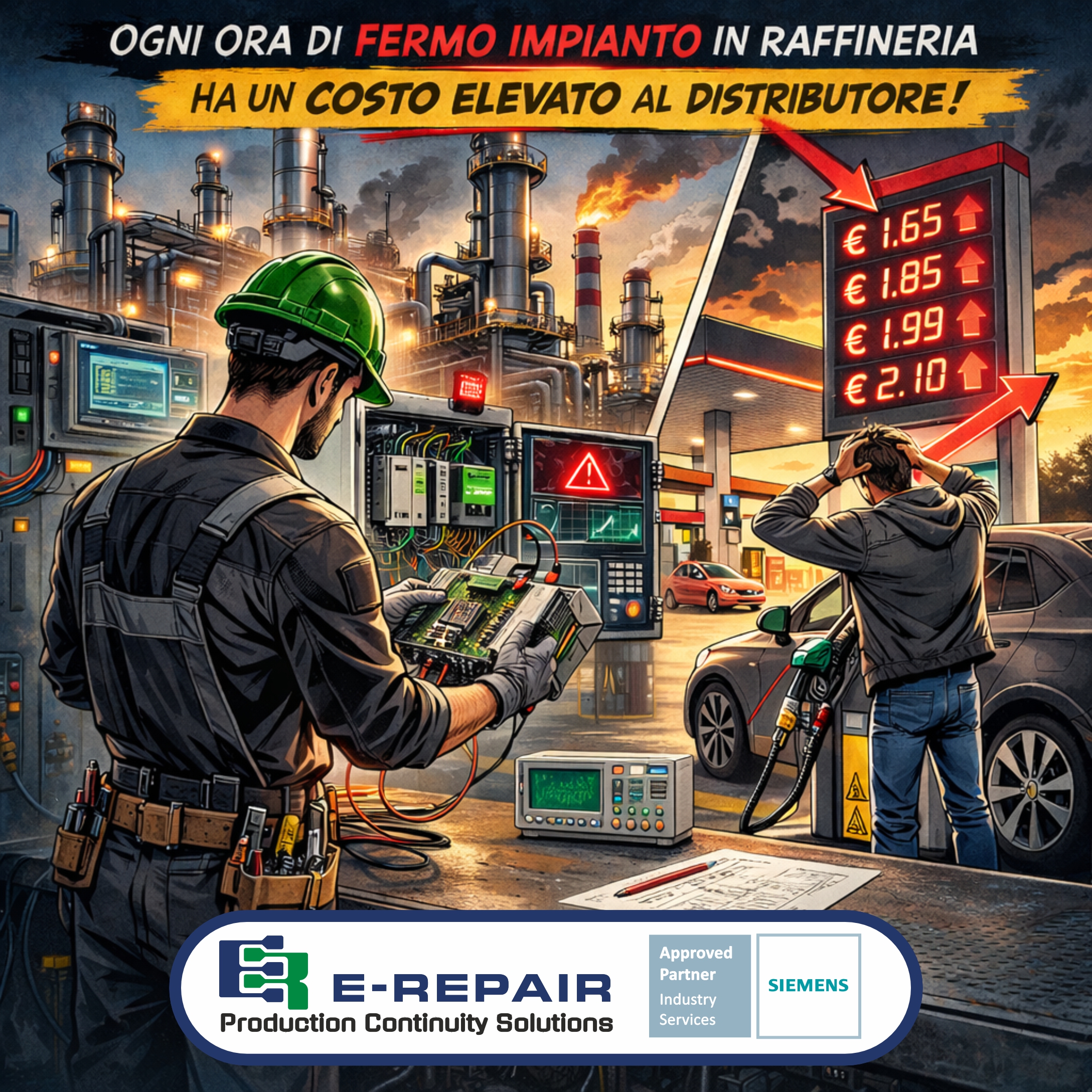
With rising and volatile energy costs, every plant shutdown weighs much more heavily 🏭⛔
➡️ Maintenance becomes a tool to reduce downtime and inefficiencies 🔧
3️⃣ Economic pressure and tariffs 🌍💸
The increase in tariffs and purchasing costs makes buying new less convenient.
➡️ Remanufacturing becomes a more economically and strategically sustainable choice ♻️📊
🏭 Advanced maintenance = industrial resilience
In this context, advanced maintenance is no longer just a technical function 🔧
It becomes a true strategic asset for the company:
🛡️ Tool for industrial resilience
🌍 Reduction of dependence on non-EU suppliers
⚙️ Protection of existing productive capital
♻️ Concrete lever for the circular economy
📊 Key element for ESG compliance — Scope 3
📊 The paradigm shift: from replacement to remanufacturing
For years, the model was simple: 👉 Failure → replacement 🔁
But today this approach is no longer sustainable ❌
Today, the paradigm has changed:
👉 Failure → analysis 🔍 → repair 🔧 → remanufacturing ♻️ → production continuity 🏭
As long as the world was stable, we replaced.
Today, in an unstable world, we remanufacture 🔄
And this is not only environmental sustainability 🌱:
it is the geopolitical sustainability of the company 🌍
🚀 Servitization and competitive advantage
Companies investing in:
servitization models — MAAS, Maintenance as a Service 🚀
structured and predictive maintenance 🤖
advanced asset life cycle management 🔄
are building a huge competitive advantage 📈, often invisible in the short term 👀
👉 Because in uncertain contexts, the real differentiator is not price 💰
It is the ability to guarantee production continuity 🏭✅
🔚 Conclusion
Maintenance is no longer a cost to be compressed ❌
It has become:
a strategic lever 🎯
a factor of resilience 🛡️
an element of industrial sovereignty 🌍
💬 In your opinion: is maintenance still a cost, or has it become a strategic lever to guarantee independence and production continuity? 🤔
🟢 Type Info Page