






Moderate Inflation and Industry: Why 2026 Changes Decisions on Maintenance and Production Continuity
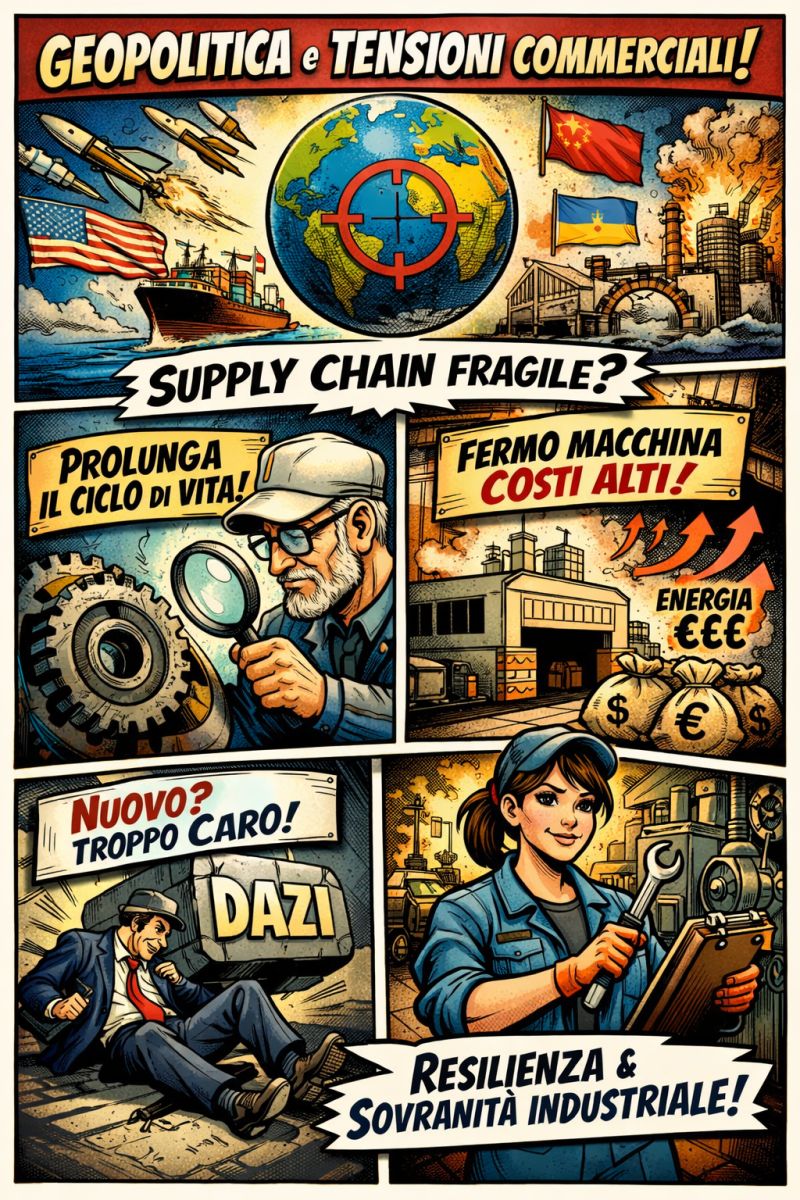
In recent years, industrial companies have had to manage a complex scenario: volatile energy, unstable raw materials, fragile supply chains, and margins under pressure.
For this reason, inflation data are not just macroeconomic information: They are operational indicators.
They directly influence:
- maintenance budgets
- spare parts inventory policies
- plant investment strategies
- asset useful life planning
The final ISTAT data for December 2025 show a particularly interesting picture: moderate and slowing inflation.
What the Numbers Really Say
In 2025, the main indicators show moderate growth:
-
NIC +1.2% annually
-
HICP +1.2% annually
-
FOI +1.1% annually
-
Average inflation 2025 approximately +1.5%
Even more relevant is the time trend: after stability in the first two quarters (+1.7%), inflation gradually slows down to 1.2% in the fourth quarter.
However, the most important fact is another:
👉 2026 begins without any inflationary carryover.
This means that prices, contracts, and costs do not automatically inherit pressure from the previous year.
Why This Changes Industrial Decisions
When inflation is high, companies tend to react defensively:
-
reduce scheduled maintenance
-
postpone technical interventions
-
delay plant overhauls
-
limit spare parts inventories
It is an understandable reaction — but a dangerous one.
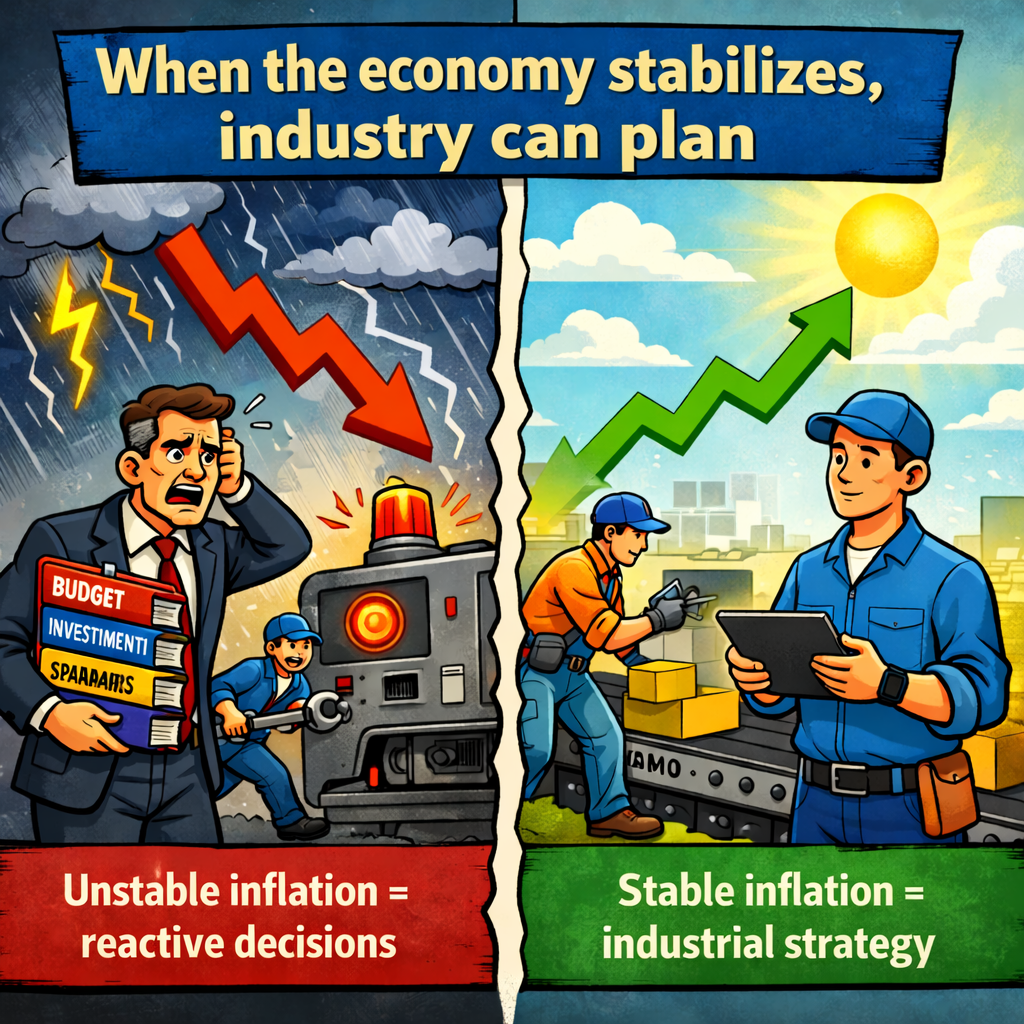
With stable inflation, the opposite happens: it becomes more convenient to plan rather than react.
The Link Between Inflation and Production Continuity
Many companies underestimate how much price stability influences operational reliability.
In reality, it completely changes the decision-making model.
High inflation
-
tactical decisions
-
emergency-driven management
-
reactive maintenance
-
urgent purchasing
-
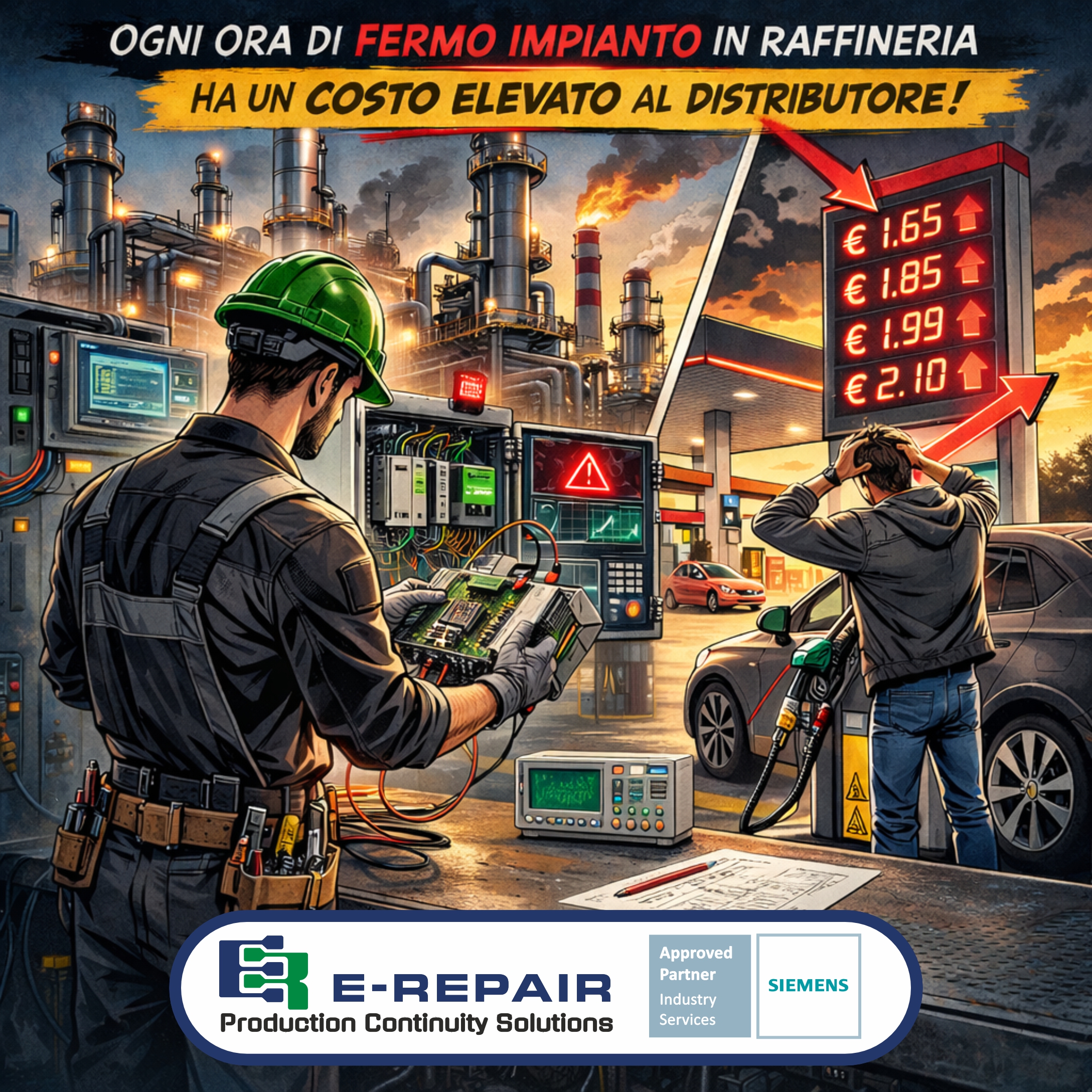
costly downtime
Stable inflation
-
multi-year planning
-
preventive maintenance
-
lifecycle management
-
inventory optimization
-
reduced downtime
The difference is not financial — it is industrial.
Maintenance Becomes a Competitive Lever
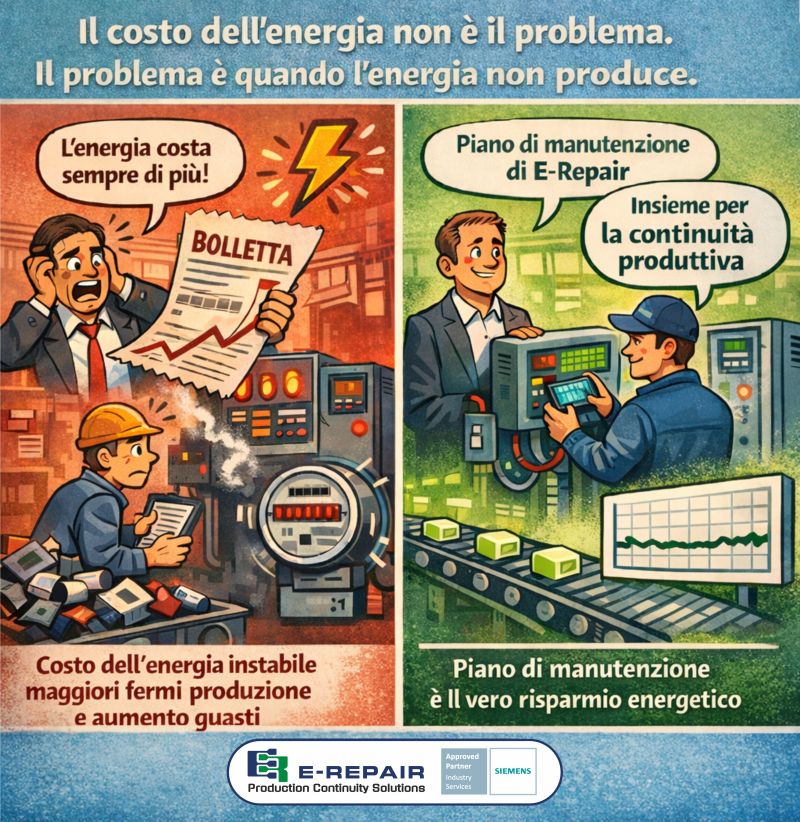
With predictable costs, maintenance returns to being a strategic investment.
It becomes possible to:
-
schedule overhauls without economic pressure
-
regenerate components instead of replacing them
-
extend the life of existing machines
-
avoid premature retrofits
-
reduce the risk of plant downtime
In essence, companies move from a survival logic to a control logic.
Impact on the Supply Chain
Moderate inflation also affects industrial spare parts management.
When prices are unstable:
-
purchasing happens too late
-
or too much capital is tied up
When prices are stable:
-
inventories are properly sized
-
idle capital is reduced
-
component shortages are avoided
This directly impacts production continuity.
The Real Competitive Advantage of 2026 with the E-Repair MAAS System
The key point is not that prices are increasing slowly; The key point is that they become predictable.
And in industrial production, predictability is what enables operational risk reduction.
Today, competitiveness no longer depends only on raw material costs, but on how quickly a company can:
-
prevent downtime
-
maintain consistent standards
-
meet delivery deadlines
-
guarantee reliability to customers
Conclusion
The slowdown in inflation is not just good economic news.
It is a strategic window.
It allows companies to move from defensive management to true industrial management:
less emergencies, more planning, fewer unexpected costs, greater production continuity.
Those who use this phase to structure maintenance and asset management will enter the next economic cycles with a concrete competitive advantage.