





The lowest price is not always an advantage
Sometimes the price difference between an approved partner and a generic supplier may seem significant.
But the right question is not:
“Why is this one more expensive?”
The real question is:
👉 “Why is this one so cheap?”
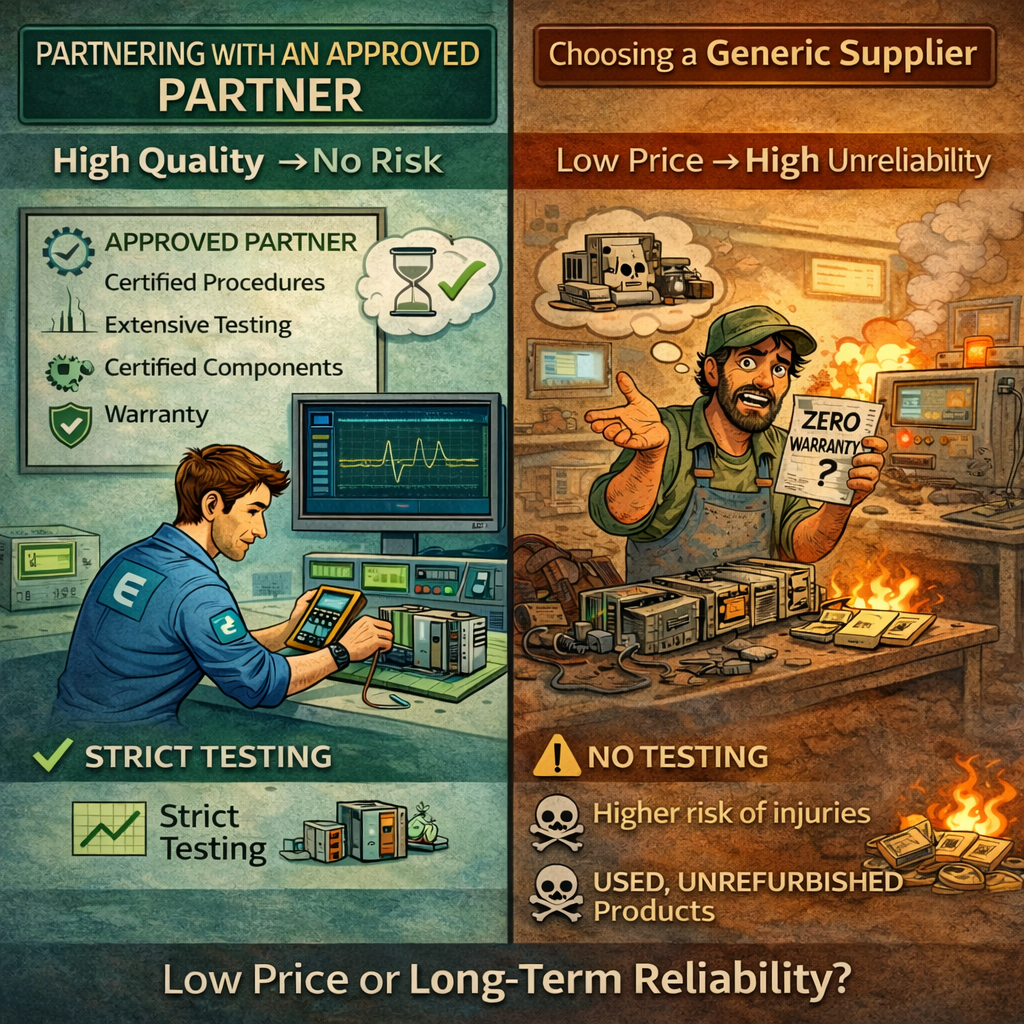
Behind a very low price, important risks are often hidden:
⚠️ no real bench testing
🔄 lack of component traceability
📉 work carried out without certified procedures
🛑 used parts sold as “refurbished”
❌ zero accountability in case of failure
🛡️ no warranty or a non-verifiable one
🔥 risk of breakage, short circuits, and explosions
🧑🏭 potential injuries for line operators
When a component is not properly refurbished, the production line is exposed to instability, reduced performance, false signals, or sudden failures that directly affect safety and productivity.
Why an approved partner makes the difference
An approved partner does not simply sell “a component,” but a full set of processes, controls, and responsibilities:
-
Certified procedures according to Siemens standards
-
Technical disassembly and inspection
-
Professional cleaning and dedicated electronic interventions
-
Replacement of critical components with certified parts
-
Dynamic tests and simulations under real operating conditions
-
Final bench testing
-
Complete traceability and verifiable warranty
These steps have a cost because they require:
-
professional equipment
-
qualified personnel
-
adequate testing time
-
compliance with international standards
-
direct responsibility for the result
But they provide a decisive advantage: reliability and production continuity.
The hidden risks of a generic supplier
A generic supplier almost always focuses on price.
And this approach leads to concrete consequences:
🔁 recurring failures
❓ unpredictable component behavior
⏱️ loss of production hours
💸 increased maintenance costs
🛡️ safety issues
🚨 risk of unplanned machine downtime
⚖️ legal exposure in case of workplace injuries
The “initial saving” quickly turns into a higher cost:
machine downtime = immediate economic loss.
Conclusion: a lower price now, or long-term reliability?
In industrial electronics maintenance, the highest cost is never the component price:
it’s the production downtime.
Relying on an approved partner means choosing:
-
quality
-
safety
-
traceability
-
technical support
-
operational continuity
-
certified responsibility
Relying on a generic supplier means taking on an operational (and financial) risk far greater than the initial saving.
🟢 Content Page article on the hidden costs and risks of non-certified industrial electronics suppliers