Español (España)
  Deutsch (Deutschland)
  Français
  Italiano








Why MICROMASTER 440 drives are still critical today
The MM440 is often integrated into the mechanical behavior of the machine.
Its replacement normally requires:
- recalibration of acceleration/deceleration ramps
- adaptation of motor tuning
- PLC parameter modification
- product quality requalification
- extended line downtime
For this reason, in existing plants the drive is usually maintained through advanced maintenance.
What MICROMASTER 440 drives are
They are inverters with sensorless vector control, designed to handle variable loads while maintaining stable torque even at low speeds.
They allow:
- controlled acceleration
- constant speed under load
- relative positioning accuracy
- stability in repetitive cycles
Their goal is not only to move the motor, but to guarantee repeatability of the production process.
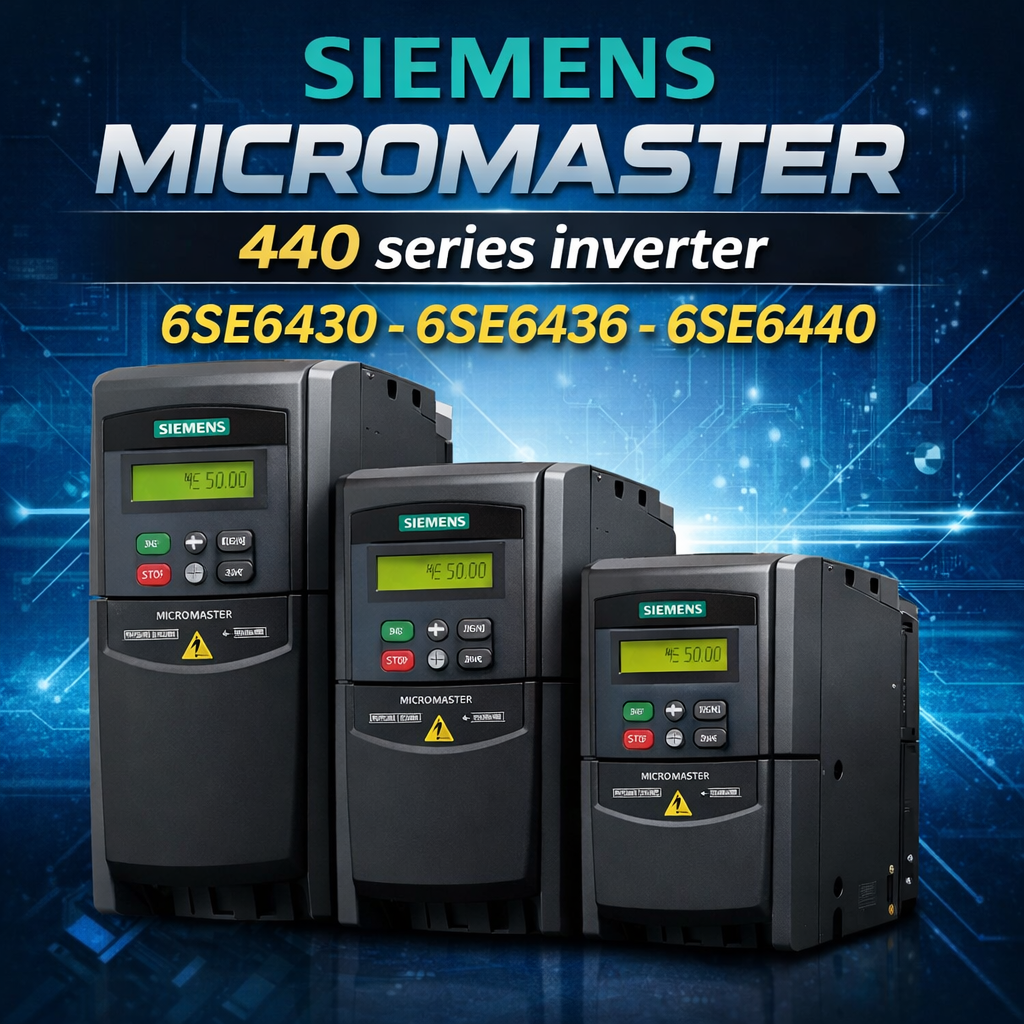
Product roots – MM440
👉 6SE6430 – standard dynamic applications
👉 6SE6436 – high-performance versions
👉 6SE6440 – industrial heavy duty
Common MICROMASTER 440 features
🎯 Sensorless vector control
⚡ Stable torque at low speeds
🔁 Cycle repeatability
📈 Stability under variable load
🧠 Integration with industrial PLCs
Typical MM440 applications
The MICROMASTER 440 is used in machines where dynamics directly affect quality:
- high-speed packaging
- winders and unwinders
- vertical handling systems
- synchronized automatic lines
- special machines
- controlled transport systems
In these contexts, variation in drive behavior produces scrap or line stoppages.
Most frequent MICROMASTER 440 failures
After years of operation the following are observed:
- overcurrent faults during acceleration
- speed instability under load
- power IGBT failures
- torque control errors
- random stops during cycle
- Typical electronic aging phenomena.
Repair or replace a MICROMASTER 440?
Replacement with modern inverters often changes machine dynamics.
- Regeneration instead allows:
- maintaining original behavior
- avoiding product requalification
- reducing downtime
- preserving production quality
For this reason it is the most adopted solution in existing plants.
E-Repair services for MICROMASTER 440
E-Repair, the only Siemens Authorized Service Partner in Europe, provides full support:
🔧 Repair in a Siemens-certified internal laboratory
♻️ Full regeneration to “zero-hours” standard
⚡ Advance replacement unit for production emergencies
💾 Parameter backup and restore
🧼 Professional technological cleaning
🩺 Fault diagnostics and preventive maintenance
🔐 Functional and safety testing
Processes compliant with:
BS 8001:2017
AFNOR XP X30-901:2018
ISO 14064-1
Conclusions
The MICROMASTER 440 is a central component for the stability of automatic machines.
Structured maintenance makes it possible to maintain process quality and prevent line stoppages without invasive interventions.
🟢 Type: CLUSTER PAGE