Español (España)
  Deutsch (Deutschland)
  Français
  Italiano








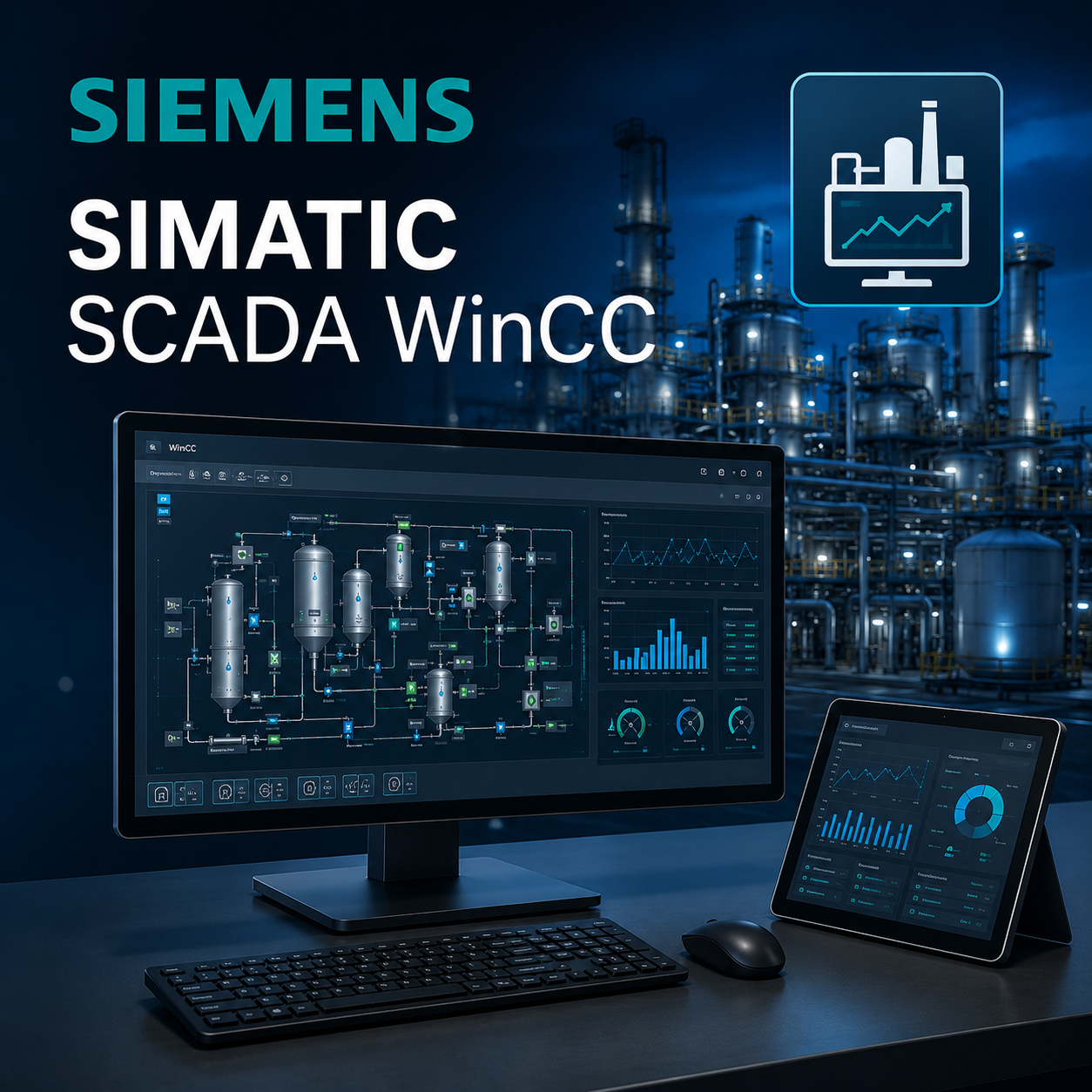
Siemens SIMATIC SCADA WinCC systems represent an advanced level of supervision and control for modern industrial automation plants.
Through a centralized digital platform, WinCC makes it possible to monitor production processes, display machine data, manage alarms, and support operators in controlling complex plants or multiple production lines.
SCADA WinCC architectures can be integrated with different industrial hardware devices, including SIMATIC IPCs, Rack PCs, Box PCs, HMI panels, and SIMATIC automation systems.
👉 In more complex production environments, the operational continuity of the SCADA system also depends on the reliability of the hardware on which the platform is installed or with which it interacts.
🧠 What Is a WinCC SCADA System?
WinCC is the Siemens SCADA platform designed for:
🖥️ centralized plant supervision
📊 real-time process monitoring
🧠 collection, visualization, and analysis of historical and live data
🚨 advanced alarm management
🌐 integration with IT, OT, and MES systems
⚙️ control and monitoring of multiple machines or production lines
👉 Compared with an individual HMI panel, the SCADA system operates at a higher level of the automation architecture and enables broader, centralized management of the production process.
⚙️ Main Features – SIMATIC SCADA WinCC
SIMATIC SCADA WinCC systems can be configured according to the size and complexity of the plant.
Key features include:
- scalable architecture, from individual machines to complex plants;
- centralized supervision of processes and production lines;
- real-time monitoring;
- alarm management;
- data historization and analysis;
- multi-user and multi-client configurations;
- remote and web-based access, depending on the version used;
- integration with SIMATIC S7 PLCs, HMI systems, and IT/OT infrastructures;
- support for process diagnostics and optimization applications.
👉 The different configurations make it possible to adapt the platform to the specific requirements of the plant, from basic applications to the most complex industrial systems.
🏭 Typical Applications of SIMATIC SCADA WinCC Systems
WinCC SCADA systems are used in different industrial sectors:
- manufacturing industry 🏭
- energy and utilities ⚡
- oil and gas 🛢️
- automotive 🚗
- chemical and pharmaceutical plants 🧪
- food industry
- packaging
- industrial handling and logistics
- process plants
- smart factories and Industry 4.0 and 5.0 projects
👉 They are particularly suitable when it is necessary to supervise multiple machines, manage large volumes of data, and maintain centralized control of the plant.
🔍 MLFB Families of SIMATIC WinCC Systems
The SIMATIC WinCC ecosystem includes different software families, runtime licenses, engineering environments, and SCADA platforms.
Unlike HMI hardware devices, which are identified by specific product codes, the MLFB roots associated with WinCC may primarily refer to:
💻 software licenses
🧠 configuration environments
🌐 supervision platforms
🖥️ runtime systems
🔹 WinCC Runtime
Solutions used for the operational functioning of the SCADA system.
They may include:
- runtime licenses;
- client and server configurations;
- alarm management;
- synoptic display management;
- real-time monitoring;
- data historization.
🔹 WinCC Engineering
Tools dedicated to system design and configuration.
They may include:
- HMI and SCADA configuration;
- interface development;
- PLC integration;
- tag management;
- synoptic design.
🔹 WinCC Unified
A new-generation platform designed for advanced industrial architectures.
Key features include:
- web-based technology;
- browser access;
- IT/OT integration;
- greater scalability;
- support for Industry 4.0 and 5.0 applications.
🔹 WinCC Classic and Legacy Systems
Previous versions that are still installed in many industrial plants.
They may require particular attention in the event of:
- obsolete hardware;
- migration difficulties;
- legacy configurations;
- unavailability of spare parts;
- the need to maintain compatibility with the existing architecture.
👉 To correctly identify the product or license, it is always necessary to check the complete MLFB code shown in the documentation or on the device.
⚠️ Production Continuity: The Strategic Role of Hardware
The SCADA system represents one of the most strategic levels of the industrial automation architecture.
Although WinCC is a software platform, its correct operation also depends on the reliability of the hardware devices on which it is installed or with which it communicates.
A malfunction affecting a SIMATIC IPC, Rack PC, Box PC, or HMI device connected to the system may cause:
❌ loss of centralized supervision
❌ failure to display process data
❌ difficulties in alarm management
❌ unavailability of analysis and diagnostic functions
❌ slowdown of operational activities
❌ downtime affecting one or more production lines
❌ difficulties in recovering configurations stored on hardware devices
👉 In complex systems, industrial hardware maintenance is essential for reducing the risks associated with plant downtime.
🛠️ E-Repair Services for the Hardware of SIMATIC SCADA WinCC Systems
E-Repair supports the production continuity of plants equipped with SIMATIC SCADA WinCC systems through technical services dedicated to the industrial hardware on which supervision platforms are installed or with which they interact.
Services may cover:
💻 SIMATIC IPCs
🖥️ industrial Rack PCs and Box PCs
⚙️ HMI operator panels
🧠 hardware devices containing machine data and critical configurations
🌐 electronic components integrated into the automation architecture
E-Repair offers:
🔧 component-level repair in the in-house technical laboratory
♻️ electronic remanufacturing with zero-hour reset
⚡ advance replacement service with a remanufactured product, where available
🧠 backup, protection, and recovery of machine data and configurations stored on hardware devices
💻 verification of electronic components and hardware configurations
🧰 on-site and remote technical support
🧼 technological cleaning with biodegradable solvents
🔍 functional testing and technical inspection
👉 E-Repair services concern the maintenance and remanufacturing of industrial hardware. WinCC application configuration and license management remain separate activities.
🌱 Sustainable Maintenance and Circular Economy
Services are performed through processes compliant with:
- ISO 14001 – Environmental management system;
- ISO 14064-1 – Carbon footprint of the organization;
- BS 8001:2017 – Circular economy;
- AFNOR XP X30-901:2018 – Circular economy.
E-Repair Partner Siemens applies an advanced maintenance model focused on:
✔️ reducing plant downtime;
✔️ extending the lifecycle of industrial hardware;
✔️ limiting the premature replacement of devices;
✔️ protecting data and configurations stored on legacy systems;
✔️ ensuring the traceability of repair and remanufacturing processes;
✔️ contributing to the sustainability of the industrial supply chain.
🚀 Why Choose a Qualified Partner
The online market includes numerous suppliers offering used or refurbished industrial components without providing sufficient information about the inspections performed.
For hardware devices integrated into a SCADA architecture, the quality of maintenance is particularly important.
Relying on a qualified partner means being able to count on:
✔️ component-level repair;
✔️ complete functional testing;
✔️ verification of hardware components;
✔️ backup and recovery of machine data, where technically feasible;
✔️ traceability of repair and remanufacturing processes;
✔️ specialized technical support;
✔️ greater operational reliability;
✔️ reduced risks associated with plant downtime.
👉 The choice of supplier is also relevant for companies subject to ESG requirements and supply chain traceability obligations.
❓ FAQ – SIMATIC SCADA WinCC and Industrial Hardware
What is a SIMATIC SCADA WinCC system?
It is a Siemens platform used for centralized supervision of industrial plants, process monitoring, alarm management, and data analysis.
What is the difference between a SCADA system and an HMI panel?
An HMI panel generally allows the operator to interact with an individual machine or a specific area of the plant. A SCADA system instead enables broader, centralized supervision of multiple machines, production lines, or processes.
Does E-Repair provide services for WinCC software?
E-Repair specializes in industrial hardware maintenance. Services may cover SIMATIC IPCs, Rack PCs, Box PCs, HMI panels, and electronic devices connected to the supervision system. WinCC application configuration and license management remain separate activities.
Can the hardware used in WinCC SCADA systems be repaired or remanufactured?
Yes. Before replacing a device, it is possible to assess technical diagnosis, component-level repair, electronic remanufacturing, data backup, and the availability of new or remanufactured units.
Why is data backup important in legacy systems?
With obsolete devices, migrating configurations can be complex. Protecting machine data and configurations stored on the hardware helps reduce operational risks in the event of a malfunction.
📌 Conclusion
SIMATIC SCADA WinCC systems represent the core of industrial supervision.
Ensuring the reliability of the hardware on which they are installed or with which they interact means:
- maintaining control of the plant;
- protecting data and configurations;
- improving process management;
- reducing risks associated with obsolescence;
- limiting plant downtime;
- ensuring production continuity.
👉 Before replacing a hardware component integrated into a SIMATIC SCADA WinCC system, E-Repair supports companies in assessing component-level repair, zero-hour remanufacturing, data backup, and the availability of new or remanufactured parts.
🟢 Type: CLUSTER PAGE